Oxford Debate
A practical guide to running Oxford-style debates at conferences. They polarize nuanced topics, engage the audience through voting, and are inherently sales-proofed.
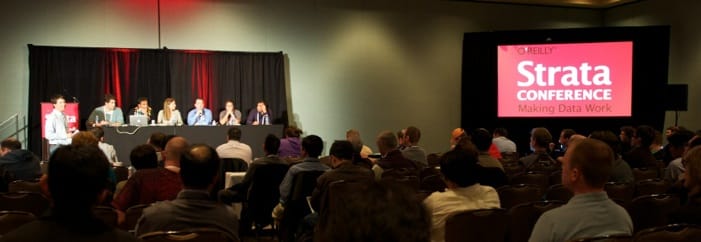
At Strata Santa Clara last week, we ran an Oxford Style debate. Mike Driscoll has a great writeup of the discussion, which got plenty of people talking.
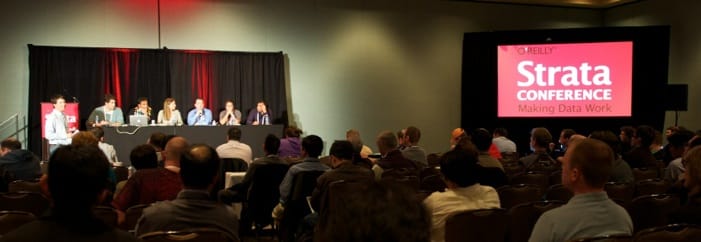
These have always been great fun; we’ve run them at Interop in the past, too. They work well for a number of reasons:
- They polarize a nuanced topic so the audience can hear both extremes.
- They engage the audience in voting, so they have skin in the game.
- They have a “conclusion“ everyone wants to tweet about.
- They’re inherently sales-proofed.
Running an Oxford-Style Debate
These debates follow the Oxford format; if you’ve ever heard the NPR “intelligence squared” podcast you know this format.
First: get a great topic
More than anything else, the key to a successful debate is a clear, controversial statement. “The sky is green” would work well; clearly everyone has opinions on it, and it’s polarizing.
The Strata topic was, “Domain expertise is more important than machine learning skill.” We discussed some other topics: “Big Data is Big Brother”; “Stats will Save the World”; “Science as we know it is over”; “Correlation beats causality given enough data.”
Then: find great debaters
You need two teams of 2–3 people. One team is for and one against the topic. They need to be willing to put aside their sensible, balanced views of the world and instead take a rabid stance in favor of one extreme or another.
Then: run the event
Set the teams up on two tables, on either side of the moderator. The moderator summarizes the proposition, then surveys the audience to see how many people are for or against.
Then the two teams get several chances to speak, usually in 5-minute chunks:
- They give their opening arguments
- They get to respond to their opponents in rebuttals
- The moderator gives them questions from the chair, floor, or back-channel
- They summarize their positions with closing arguments.
The chair then surveys again. The winning team is the one that moves the needle in their favor.