Big idea: Our Chimeral Future
Rather than 'artificial intelligence,' think 'augmented intelligence' — a chimera of human and machine. Today's AI is a classification engine, but when you combine its primitive capabilities at scale, remarkable things emerge.

As we put together the initial lineup and program for FWD50, we’re working on a central theme for our November event. With the pace of innovation and technology change, it’s hard to choose just one.
We’ve narrowed it down to six big ideas that keep coming up in travels and discussions. So over the next six posts, we’re going to look at each in a bit more detail.
Michael Wernick, the Clerk of the Privvy Council, dislikes the term “artificial intelligence.” He prefers to refer to machine learning as “augmented intelligence,” because it better reflects the hybrid of human and machine that represents our future.

Today’s AI is, at its core, a classification machine. AI has a few, primitive capabilities. But when they’re combined at scale, they can do wonderful things. For example: Train one algorithm on snippets of poetry, then ask it to predict new pieces of writing. It’s creative, but much of what it creates is nonsense.
Then train a second algorithm to distinguish human poetry from nonsense, and pit it against the first algorithm. The result of these two algorithms fighting it out can generate poetry (or images of celebrities, or fake art) with uncanny accuracy.
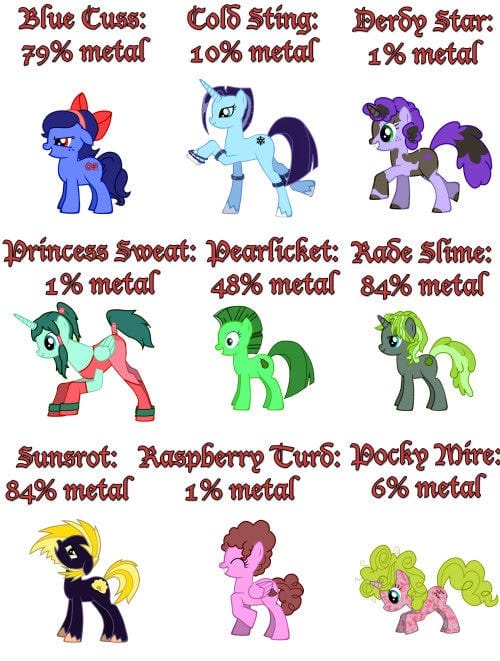
Similarly, give an algorithm the rules of Go and have it play itself over a billion times — with perfect memory — and it can beat any human.
These are simple building blocks, operating on an almost unthinkable scale. They can improve humans in astonishing ways: Revealing judicial bias; improving cancer detection; identifying suspects. What they can’t do, however, is exercise judgement. Machines are trained on an imperfect model of the world: A self-driving car trained in Sweden can identify moose, but take it to Australia and it completely misses kangaroos.
The future, then, is an augmented human. Forget human-in-the-loop computing; computer-in-the-loop humanity is around the corner, and we need to be ready for it.
The intersection of humans and machines, from automation to AI, is the defining issue of our lifetimes. Figuring out what it means — both in terms of how it helps us work better as a government, and in terms of how we regulate it — is an issue that touches every facet of society.